














What Is a Music Record Label? How It Works, How It Can Help Your Career, Advantages & Disadvantages Explained
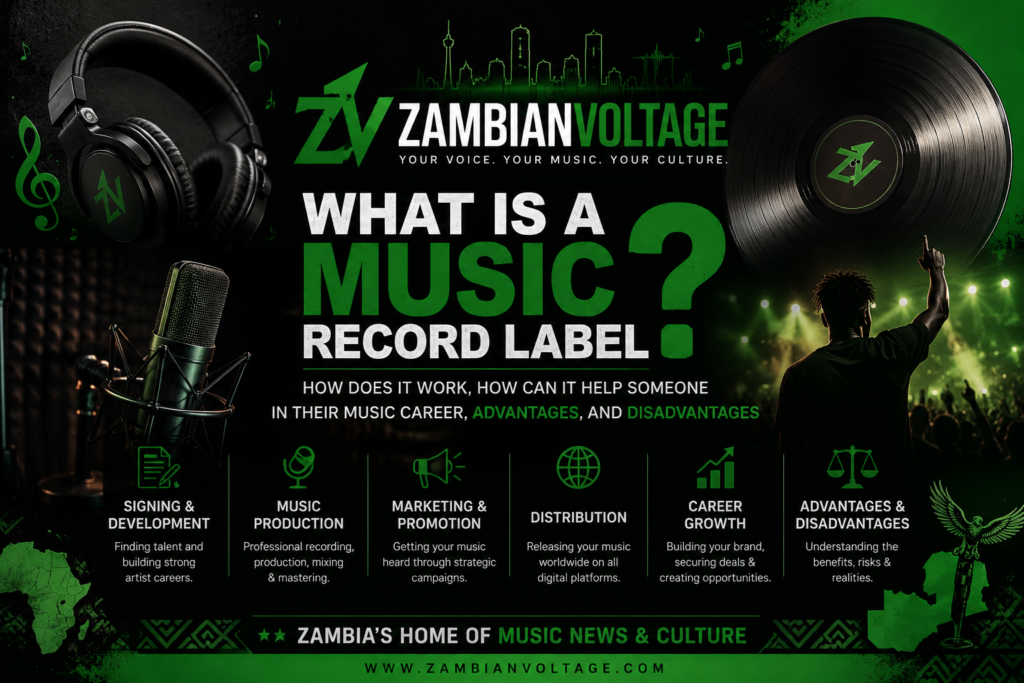
Understanding the Meaning of a Music Record Label
In the music industry, one of the most common terms artists hear is “record label.” Many upcoming musicians dream of getting signed, but not everyone fully understands what a record label really is, how it operates, or whether joining one is always the best decision.
A music record label is simply a company or organization that helps musicians create, market, distribute, and grow their music careers. Think of it as a business partner that invests in an artist and helps turn talent into a professional career.
Instead of an artist handling everything alone — from recording songs to promotion and music videos — a record label steps in to provide support, resources, connections, and funding.
Some record labels work with already established artists, while others focus on discovering and developing new talent.
In Zambia and many other countries, record labels have helped shape the careers of several successful musicians by giving them exposure, studio access, marketing support, and business guidance.
How Does a Music Record Label Actually Work?
A record label works by signing artists to agreements (contracts) and helping manage the business side of music.
Here is a simple breakdown of how the process usually works:
Talent Discovery and Signing
The first step is identifying talent. Record labels search for promising artists through:
- Social media platforms
- Music blogs and websites
- Live performances
- Viral songs
- Recommendations from producers or DJs
Once they believe in an artist’s potential, they may offer a recording deal or partnership agreement.
This contract usually explains:
- How long the artist will work with the label
- Revenue sharing percentages
- Ownership of music rights
- Album or song release expectations
- Promotional responsibilities
This stage is very important because some contracts benefit artists, while others can become problematic if not understood properly.
Music Production and Recording Support
After signing an artist, the label often helps fund music production.
This may include:
- Paying for studio sessions
- Hiring producers and sound engineers
- Funding mixing and mastering
- Songwriting assistance
- Cover art creation
Instead of struggling to record with limited resources, artists can access better-quality production.
A good song with professional sound quality increases chances of radio play, streaming success, and public acceptance.
Promotion and Marketing
One of the biggest reasons artists join labels is marketing support.
Even the best song can fail if nobody hears it.
Record labels help promote music through:
- Social media campaigns
- Radio and TV interviews
- Digital advertisements
- Press coverage
- Playlist placements
- Music blog exposure
- Influencer marketing
For example, a label may organize interviews, pay for Facebook or TikTok ads, and ensure the artist’s song reaches more listeners.
Marketing is one of the biggest costs in music, and labels usually have more experience and financial power to handle it.
Music Distribution Explained
Years ago, music distribution mainly involved CDs and physical sales.
Today, labels distribute songs digitally to platforms like:
- Spotify
- Apple Music
- Boomplay
- Audiomack
- YouTube Music
- Deezer
This ensures the artist’s music reaches listeners worldwide.
Without proper distribution, music may struggle to gain streams and visibility.
Artist Branding and Career Development
A good record label doesn’t only release songs — it helps build an artist’s image.
This includes helping with:
- Artist branding
- Fashion/image development
- Public relations
- Performance preparation
- Career planning
- Collaboration opportunities
Some labels mentor artists and help them avoid career mistakes.
They may advise an artist on what type of music suits their audience or how to position themselves in the market.
Financial Support and Investment
Music is expensive.
A label may invest money into:
- Music videos
- Studio sessions
- Promotions
- Photoshoots
- Travel expenses
- Event bookings
In exchange, the label usually earns a percentage of profits made from the artist’s music.
This is why labels carefully choose artists they believe can succeed commercially.
Different Types of Record Labels
Not all record labels operate the same way.
Major Record Labels
These are very large companies with huge budgets and international reach.
They usually have:
- Bigger marketing budgets
- Global distribution
- Industry influence
- Major partnerships
Artists signed to major labels often receive large-scale exposure.
However, competition inside these labels can be intense.
Independent (Indie) Labels
Independent labels are smaller companies.
They often provide:
- More personal attention
- Flexible deals
- Creative freedom
Many upcoming artists prefer indie labels because they may feel less controlled.
However, smaller budgets can limit promotion.
Artist-Owned Labels
Some musicians create their own labels to maintain control over their music and business.
This allows artists to:
- Own their masters
- Control releases
- Keep larger profits
- Build long-term independence
However, it also means carrying more responsibility.
How Can a Record Label Help Someone’s Music Career?
A good record label can completely change an artist’s career.
Here are some ways:
Faster Career Growth
Instead of growing slowly alone, artists can move faster because labels already have systems, money, and connections.
Professional Quality Music
Better recording quality often makes artists look more serious and professional.
Bigger Audience Reach
Labels help artists reach more fans through marketing and media exposure.
Industry Connections
A label may connect artists to:
- Producers
- DJs
- Event organizers
- International collaborations
- Sponsors
- Media companies
Sometimes success in music is not only about talent — connections matter too.
More Business Knowledge
Labels can teach artists about:
- Royalties
- Copyright ownership
- Contracts
- Streaming income
- Brand deals
This protects artists from making expensive mistakes.
Advantages of Joining a Record Label
There are many benefits to joining a good label.
Financial Support
Artists gain access to funding they may not afford alone.
Better Promotion
Labels usually have stronger marketing systems.
Professional Team
Artists work with experienced professionals.
Easier Music Distribution
Music reaches streaming platforms more effectively.
Career Guidance
Labels can help artists avoid bad decisions.
Increased Exposure
More media attention means more chances of growing a fanbase.
Disadvantages of Joining a Record Label
Although labels can help, there are also disadvantages.
Loss of Creative Freedom
Some labels control:
- Song choices
- Music style
- Image
- Release dates
An artist may feel restricted.
Revenue Sharing
Artists often do not keep 100% of earnings.
Profits are usually shared with the label.
Bad Contracts
Some artists sign unfair deals without understanding the terms.
This can lead to losing ownership of music.
Pressure to Perform
Labels invest money expecting results.
Artists may feel pressure to constantly produce hit songs.
Delayed Releases
Sometimes labels postpone music releases for business reasons.
This can frustrate artists.
Should Every Artist Join a Record Label?
Not necessarily.
Today, many artists succeed independently using social media, streaming platforms, and self-promotion.
However, a record label can still be helpful if:
- The artist lacks funding
- Marketing is difficult
- Professional support is needed
- Bigger exposure is the goal
The most important thing is choosing the right label and carefully reading contracts before signing anything.
A bad label can damage a career, while a good one can help unlock major opportunities.
Final Thoughts
A music record label can be a powerful tool in helping artists build successful careers, but it is not magic. Talent, consistency, hard work, and smart decisions still matter.
Before joining any label, artists should understand how the business works, ask questions, and avoid rushing into agreements because of excitement.
Sometimes staying independent is better. Other times, the right label partnership can take an artist from being unknown to becoming a household name.
In music, success is not only about making songs — it is also about understanding the business behind the music.